Pedagogical Branch of Cergy-Pontoise
1969 to 1974
When I arrived in France in 1969, as an educational advisor for the Ministry of Culture, I initiated the Cergy-Pontoise educational antenna with Clément Noël Douady, which was a place for interdisciplinary encounters between students and a new city in the making.
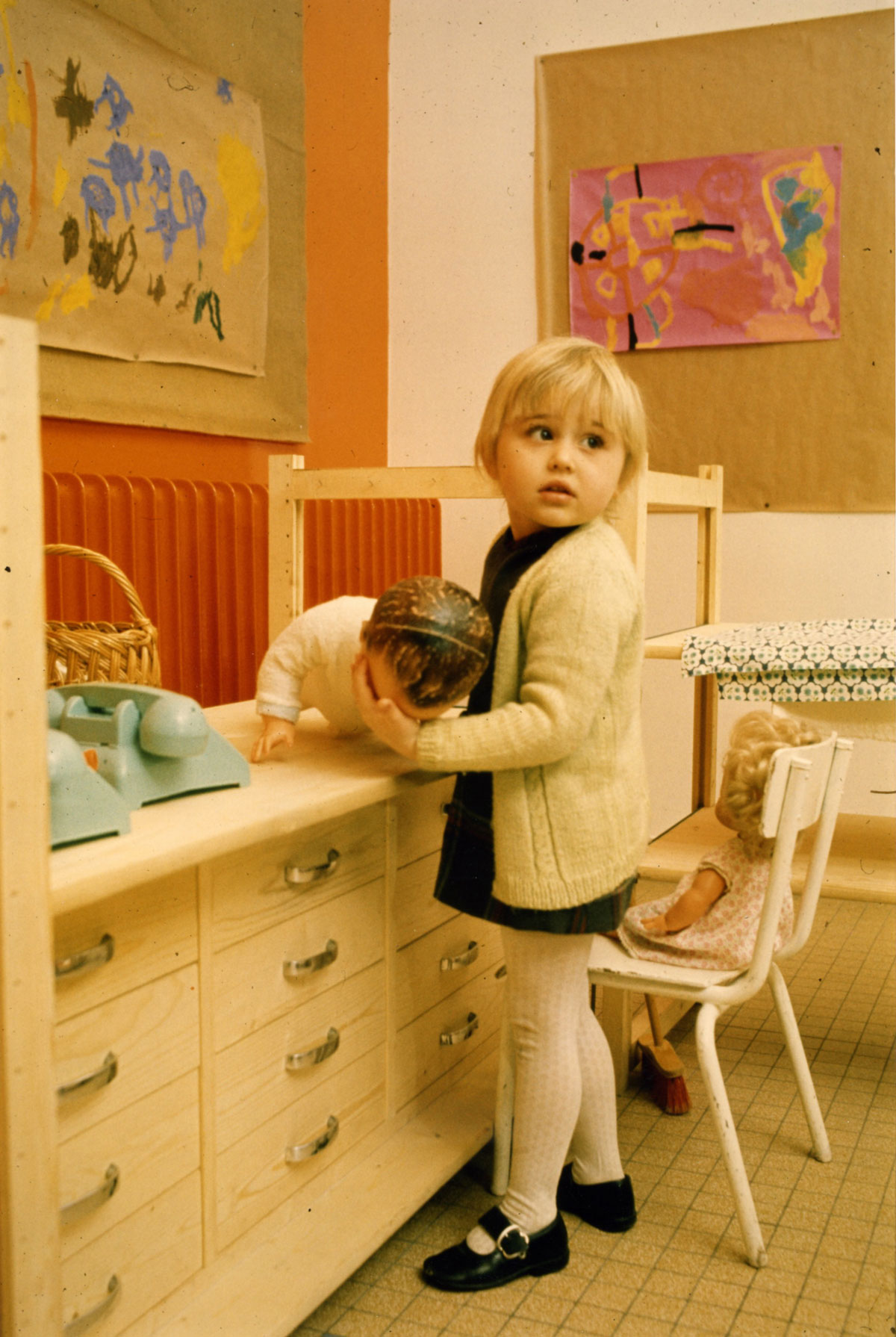
Students were asked to produce urban planning projects for the new town (school design, school furniture).
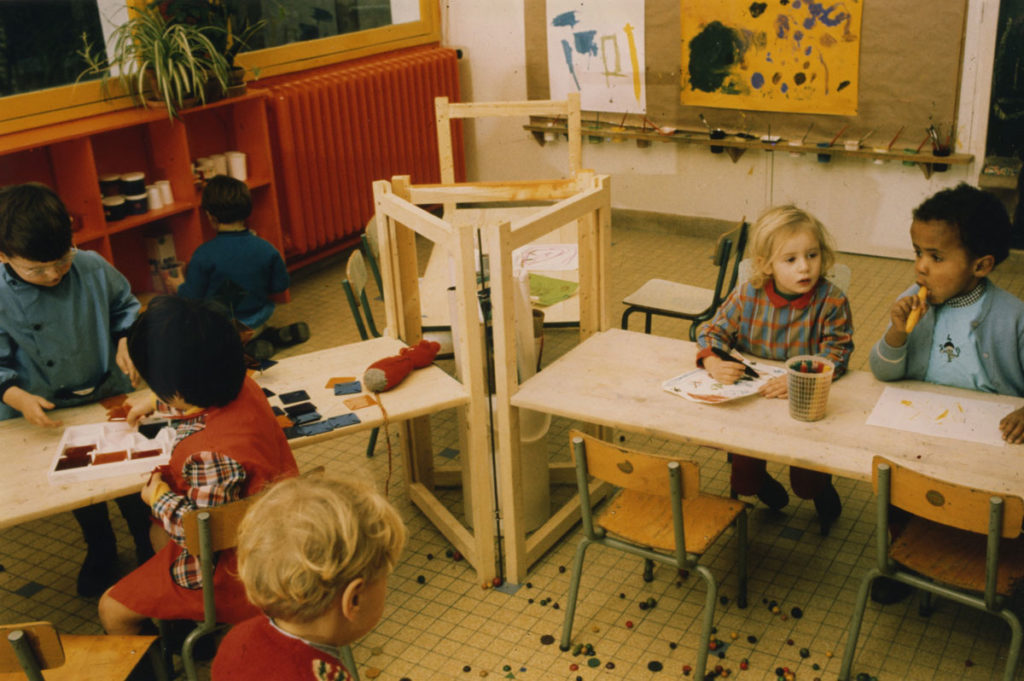
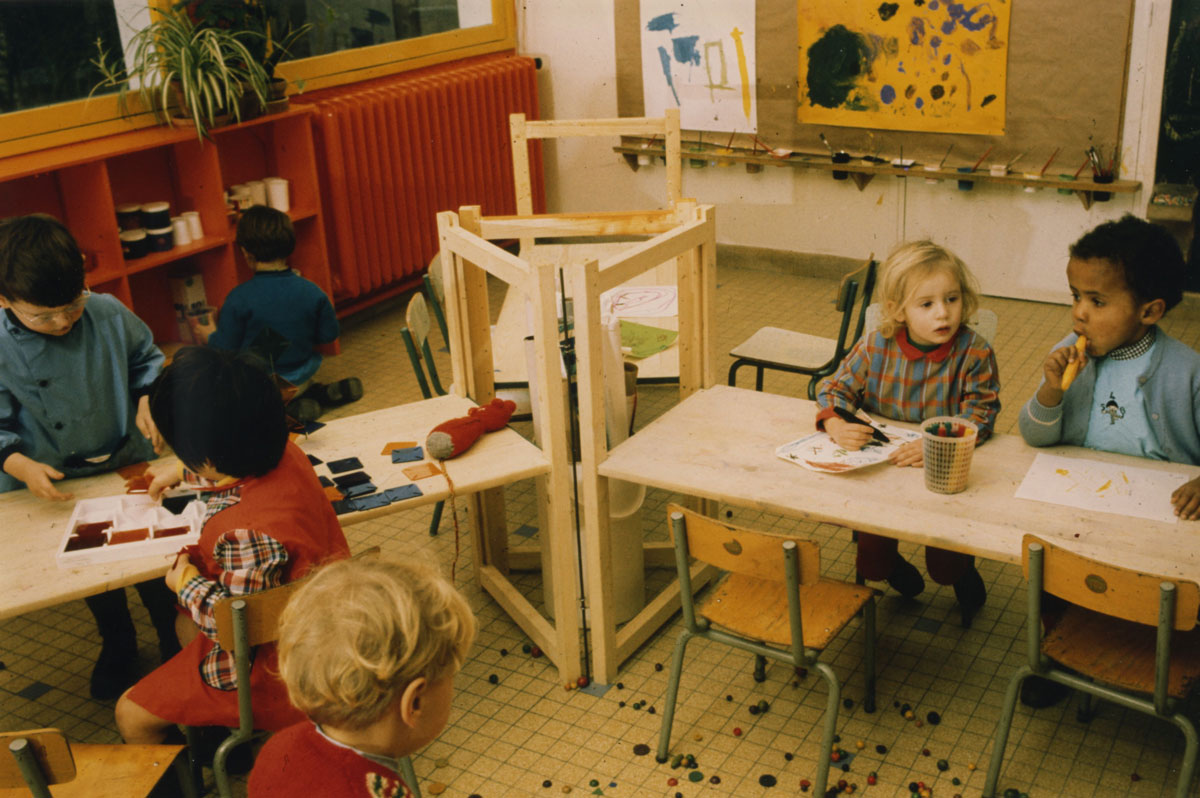
Classroom layout for interactive teaching
The philosophy behind the design of the classrooms was to rethink the classic layout and create small groups. This concept is based on new pedagogy. It may seem like a small detail, but it's a revolution in the education system.
From group to relational intelligence
This workgroup arrangement encourages exchanges and interaction between the children. It allows for dialogue and encourages exchanges between them. Children regain their place as individuals, rather than being lumped together in a group.
This conception of the classroom helps develop reflection and relational intelligence.
In 1970, with architect Clément Noël Douady, we created the Antenne Pédagogique de Cergy-Pontoise. The name Antenne came from André Malraux, then Minister of Culture, who for political reasons had wanted to break up and decentralize the old École des Beaux-Arts (and its trouble-making students) into seven, eight, nine architecture units outside Paris. I was even summoned by the Inspecteur d'Académie to talk about the qualifier "pedagogical", which, he told me, belonged to the Éducation Nationale... Just how far the compartmentalization of disciplines in France can go!
I amplified Malraux's objective and used this location to welcome students from all the schools of architecture and also to try to bring together those from other university disciplines (urban planning, sociology, geography), and to give students the opportunity to do work placements in companies, to pursue research within an urban fabric in the making. Our aim was to bring together, on neutral ground but in an identified location, different interlocutors: users, students (but not only from the Beaux-Arts), elected representatives, technicians from the EPA (Etablissement Public d'Aménagement) and the DDE (Direction Départementale de l'Equipement), so that they could work together on common concerns.
School furniture was a seemingly minor but particularly fruitful topic, which brought together these stakeholders for several months to develop a flexible, multi-purpose piece of furniture, well before the school furniture competitions. We were able to see for ourselves just how unaccustomed primary and kindergarten teachers were, and still are, to working together creatively in the presence of inspectors and elected representatives. We had intended to work on the programming of a school group. But, like any innovative experiment, it was uncomfortable, and seemed to "challenge the institutions"..... On the other hand, I found myself at odds with myself, because my laboratory, my field of study, was the new town, even though I profoundly disagreed with its conception and development. After three years, I joined Unité Pédagogique d'Architecture N°8 (UP8), the best school in Paris.


